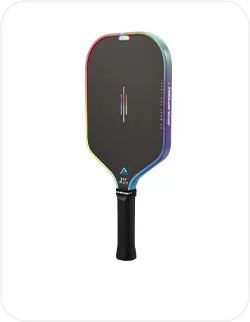

In recent years, pickleball has surged worldwide thanks to its easy learning curve, fun gameplay, and broad appeal across age groups. With annual growth often cited around 30%, it has become one of today’s fastest-growing recreational and competitive sports. As the sport evolves, the paddle—its most essential piece of equipment—plays a decisive role in a player’s comfort, control, and results.
As more players move beyond entry-level participation, standard paddles made with basic materials can feel limiting. Carbon fiber pickleball paddles have increasingly become the market’s preferred option because they are lightweight, stiff, and highly wear-resistant. Meanwhile, the number of paddle manufacturers has expanded quickly, and the gap in engineering and production quality is substantial. Many buyers mistakenly prioritize graphics and appearance over internal structure and process control, leading to paddles that delaminate, feel inconsistent, or break prematurely—hurting both performance and overall enjoyment.
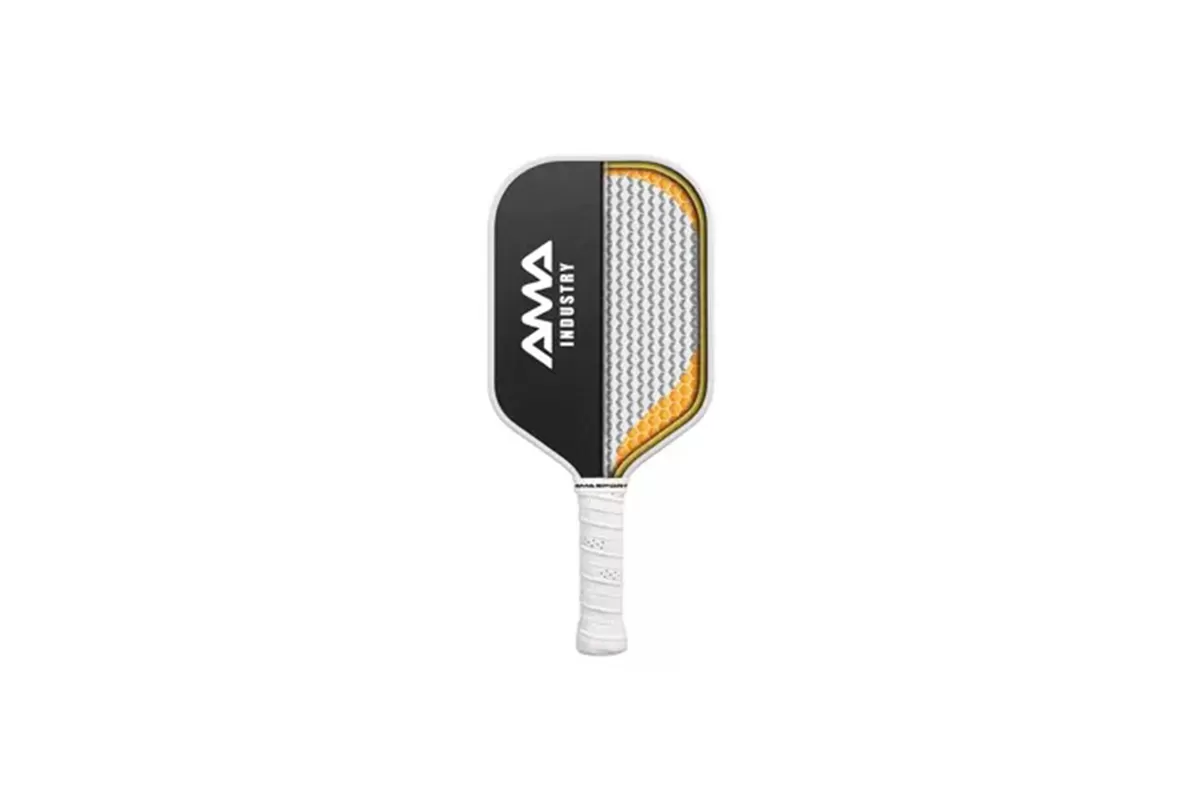
Pickleball paddles are commonly categorized by material, including wood, fiberglass, and carbon fiber. Wooden paddles are inexpensive and suitable for absolute beginners, but they are heavy, offer limited touch and control, and may warp over time. Fiberglass paddles are often a good mid-range choice, delivering a forgiving feel and decent value, but they typically cannot match carbon fiber’s stiffness-to-weight ratio.
Carbon fiber paddles sit at the premium end. Built with high-performance carbon fiber layers and formed through precise manufacturing methods, they offer several clear benefits. First, they are notably lightweight—many models fall in the 210–250g range—helping players swing faster and stay fresh during long sessions. Second, carbon fiber is exceptionally stiff, meaning less energy is lost to face deformation at impact and more power is transferred to the ball. This stiffness also supports more accurate placement for drives, drops, and resets. Third, carbon fiber designs tend to be more durable and stable under repeated impacts and changing environmental conditions such as humidity. Finally, well-engineered carbon fiber layups can improve vibration control, reducing shock to the wrist and elbow and enhancing overall comfort.
With rising demand, the market includes both professional factories and small workshops. The difference usually comes down to materials, processing discipline, and quality assurance. Reputable manufacturers typically use carefully selected carbon fiber (often higher-grade options such as T700), paired with proven core structures like polypropylene honeycomb or aluminum honeycomb to balance power, control, and durability. They rely on standardized processes—such as high-temperature compression molding and integrated bonding—to ensure the face and core fuse properly, minimizing the risk of delamination. Surface texture and finishing are also controlled to support spin generation and consistent feel. Just as important, professional suppliers run batch inspections for weight tolerance, stiffness, dimensional accuracy, and deformation to prevent unstable products from reaching customers.
When evaluating a supplier, focus on three practical criteria. (1) Technical capability and qualifications: a strong factory has modern equipment, process documentation, and an engineering team able to refine structure and performance. (2) Customization and product fit: different players need different weights, shapes, sweet-spot sizes, and handle feels, while bulk buyers may require logo printing, packaging, or spec adjustments—so OEM/ODM capability matters. (3) After-sales support and reputation: clear warranty policies, responsive communication, and real customer feedback often reflect whether a manufacturer can deliver consistent long-term value.
 EN
EN