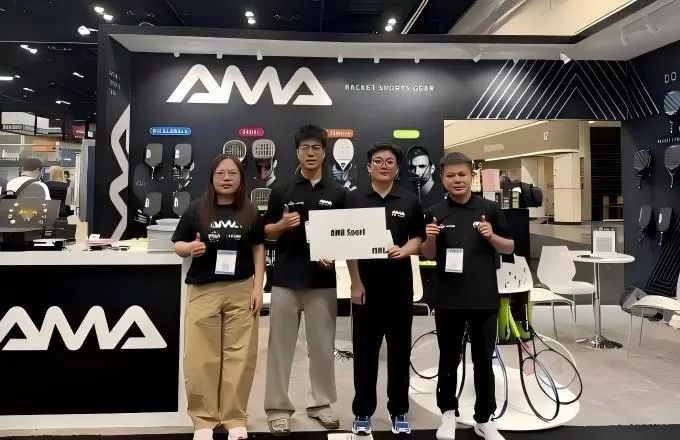

A closer look at how greater automation in the felt-covering process supports more stable quality, scalable production, and dependable OEM delivery for tennis and padel ball brands.
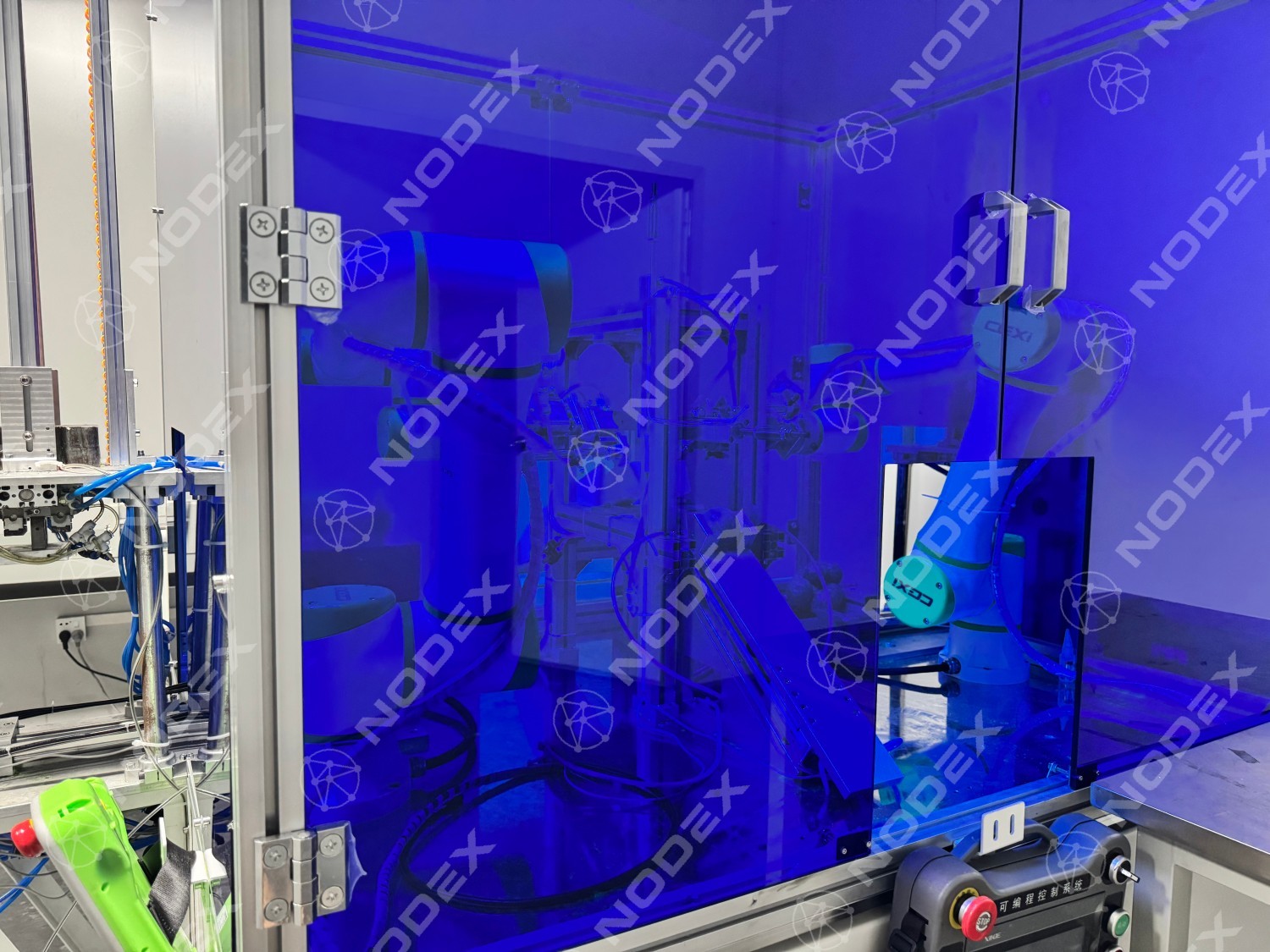
Mechanical felt covering equipment at the Nodex ball manufacturing facility.
Consistency is not created by one inspection at the end of the line. It is built into every repeatable step of the manufacturing process. |
In tennis and padel ball manufacturing, the felt is far more than a visual outer layer. Its position, adhesion, seam alignment, surface uniformity, and interaction with the rubber core all influence how the finished ball looks, feels, and performs. Even small variations can become noticeable when a brand compares samples, reviews a large production batch, or evaluates repeat orders produced months apart.
For manufacturers, the challenge is therefore not simply to cover a ball with felt. The real challenge is to reproduce the same result—ball after ball, batch after batch—while maintaining efficient output and reliable delivery. This is why Nodex has invested in mechanical felt covering technology as part of our ongoing manufacturing upgrade.
Manual production depends heavily on operator skill. Experienced workers can achieve excellent results, and human judgment remains important throughout manufacturing. However, when repetitive actions such as felt positioning, wrapping, pressing, and transfer rely too heavily on individual handling, natural variation becomes harder to control at scale.
Differences in placement, pressure, timing, or handling can affect seam position, surface flatness, and the way the felt bonds to the ball. These differences may be small on a single unit, but they can become more visible across thousands of balls. A manual process can also make production planning more sensitive to labor availability, training time, and changes in operator rhythm.
The goal of automation is not to remove skilled people from the process. It is to move the most repetitive actions into a controlled mechanical cycle, allowing operators to focus more attention on setup, monitoring, inspection, maintenance, and process improvement.
Mechanical felt covering introduces a more repeatable sequence for handling and applying the felt. Machine-guided movements help standardize how each ball enters the covering stage, how the felt is positioned around the core, and how the covered ball is transferred to the next process. Operators continue to supervise the equipment, feed materials, verify settings, and inspect output, but the critical repetitive motions are performed with greater consistency.
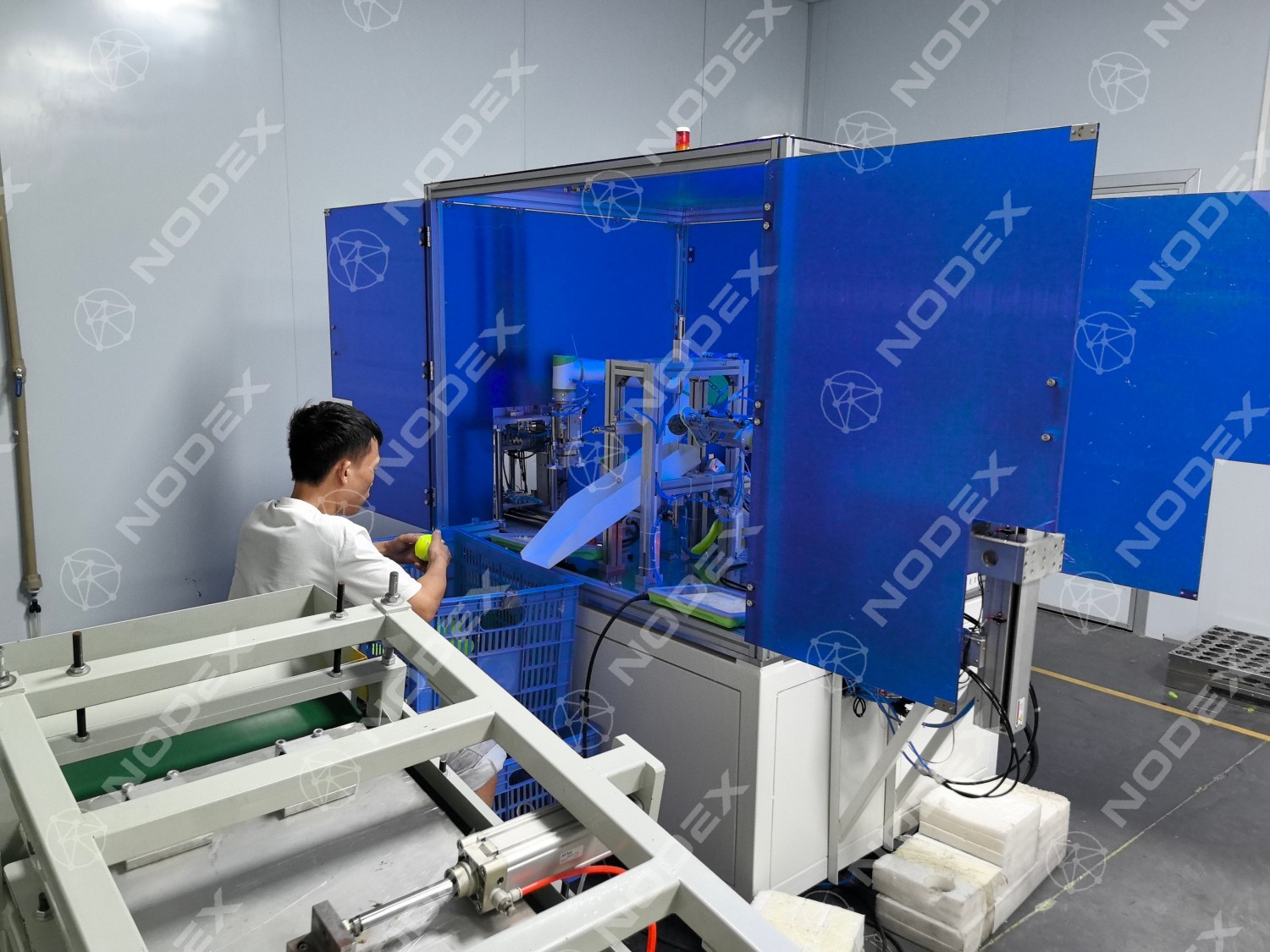
Automation standardizes repetitive actions while trained operators continue to supervise production and quality.
The position of the felt pieces and the alignment of the curved seams are among the most visible indicators of manufacturing consistency. A mechanical cycle reduces dependence on hand placement alone and helps each ball follow the same covering path. This supports a cleaner, more uniform appearance across a production batch and makes it easier to reproduce an approved sample during mass production.
Stable contact between the felt and rubber core is essential for long-term durability. Wrinkles, lifted edges, uneven bonding, or localized gaps can affect both appearance and service life. By making the covering motion and pressing sequence more repeatable, mechanical equipment helps reduce avoidable variation during this critical stage. Adhesive selection, application control, curing conditions, and material preparation remain equally important, so the equipment functions as part of a complete process rather than as a stand-alone solution.
For an OEM customer, consistency means more than having several good samples. It means receiving a bulk order in which the balls show a stable appearance and performance profile, then being able to reorder with confidence. Mechanical felt covering supports this objective by reducing variation in one of the most handling-intensive production stages. When combined with controlled rubber cores, specified felt materials, standardized curing, and final inspection, it contributes to a more repeatable finished product.
Automation also improves the predictability of the production cycle. A more stable rhythm makes it easier to plan capacity, balance downstream processes, and support larger or recurring orders. For brand customers, this translates into a stronger foundation for launch schedules, seasonal programs, distributor replenishment, and long-term supply planning. Capacity alone is not the objective; dependable capacity with controlled quality is what matters.
A machine can repeat a movement, but it cannot compensate for uncontrolled materials or weak process management. Consistent results still depend on the full manufacturing system. At Nodex, the felt-covering stage is connected with material checks, equipment setup, in-process inspection, curing control, and finished-ball evaluation according to the product specification and customer requirements.
Operators remain responsible for confirming material condition, monitoring machine performance, identifying abnormal output, and making adjustments when necessary. Preventive maintenance and process records are also important because a stable machine condition is essential for stable production. In other words, automation strengthens quality control when it is supported by trained people and disciplined procedures.
Customer Priority | Manufacturing Value |
Approved sample reproduction | A more repeatable covering process helps transfer the approved appearance and construction into volume production. |
Large-order consistency | Standardized machine movements reduce avoidable variation across longer production runs. |
Repeat-order reliability | Controlled process settings make it easier to maintain a stable manufacturing reference for future orders. |
Scalable supply | More predictable output supports product launches, replenishment programs, and long-term OEM cooperation. |
Customization support | Brands can combine their selected felt, color, packaging, and performance requirements with a more controlled production process. |
The move from manual handling toward mechanical felt covering reflects a broader manufacturing principle at Nodex: quality should be designed into the process, not inspected in only after production is complete. Every investment in equipment must create practical value—more stable products, stronger production control, improved scalability, and more dependable service for our customers.
For tennis and padel ball brands, the outer felt is one of the first things a player sees and one of the key materials that influences the playing experience. By improving how this layer is applied, we strengthen the connection between product design, sample approval, and mass-production results.
Develop Your Next Ball Program with Nodex
From product specifications and material selection to sampling, mass production, quality control, and customized packaging, Nodex supports OEM and private-label tennis and padel ball projects with an integrated manufacturing approach.
| Engineered for Champions. Built for Brands. |

 EN
EN