
Modern tennis rackets are engineered products that combine advanced materials, precision manufacturing, and strict quality control. For global brands and distributors, understanding the tennis racket manufacturing process is essential when selecting a reliable tennis racket manufacturer. At Nodex Industry, production is built on a standardized, traceable, and quality-driven system. From raw carbon fiber to finished rackets ready for export, every step is carefully controlled to ensure consistency, durability, and performance.
This comprehensive guide takes you behind the scenes of our factory to reveal exactly how professional tennis rackets are made — from raw carbon fiber to the final packaged product.
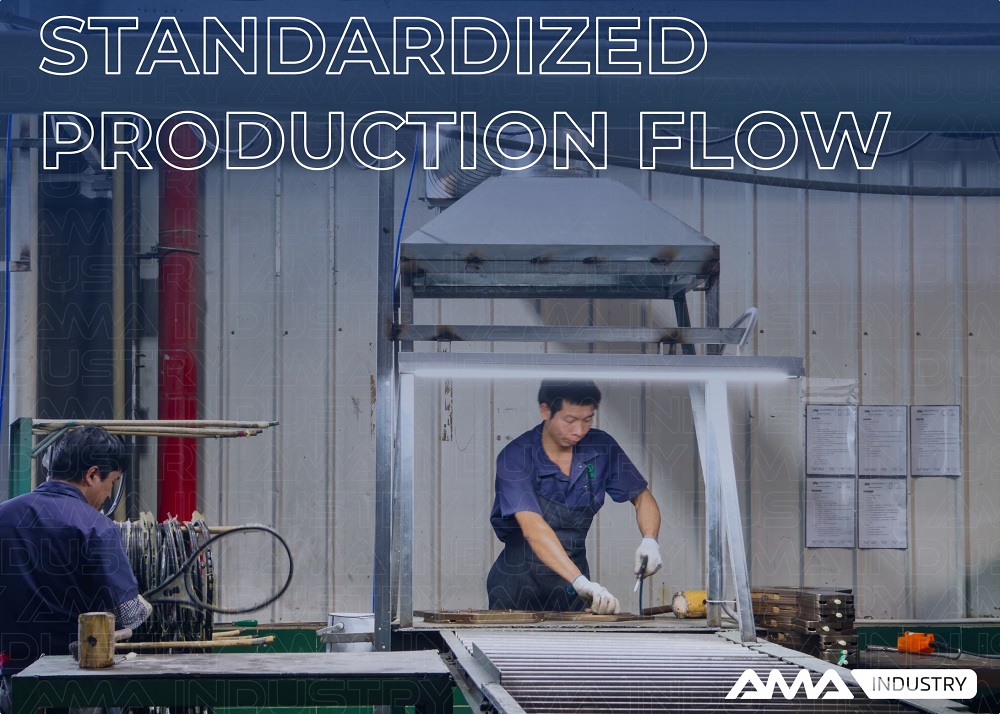
A professional tennis racket is not made in a single step but through a structured, multi-stage process. At Nodex Industry, the full tennis racket manufacturing process includes 12 key stages:
T1 Precision Layup & Pre-Forming
Carbon fiber prepreg sheets are cut and layered according to specific design requirements. Fiber orientation, layer count, and positioning directly affect strength, flexibility, and weight. The material is then pre-formed into a rough racket shape.
T2 Controlled Molding
The pre-formed structure is placed into a precision mold and subjected to high temperature and pressure. This step consolidates the carbon fiber layers into a solid frame while ensuring structural integrity and consistency.
T3 Trimming & Sanding
After demolding, excess material is removed. The frame is trimmed and sanded to achieve accurate dimensions and a smooth surface, preparing it for further processing.
T4 Precision Drilling
String holes are drilled using high-precision equipment. Hole alignment and accuracy are critical to ensure proper string tension distribution and avoid structural damage.
T5 Priming & Painting
A base primer is applied to improve coating adhesion. The frame is then painted using controlled spraying techniques to achieve uniform color and finish.
T6 Decal & Graphic Application
Brand logos, model details, and custom graphics are applied using water decals or transfer techniques. This stage is essential for brand identity and product differentiation.
T7 Clear Coating & Curing
A transparent protective layer is applied over the graphics. The frame is then cured under controlled conditions to enhance durability, gloss, and resistance to wear.
T8 Grommet Installation
Protective grommets are installed into the drilled holes. These components prevent string friction from damaging the frame and extend product lifespan.
T9 Handle & Grip Assembly
The handle structure, butt cap, and grip are assembled. Grip size, material, and wrapping method can be customized based on market requirements.
T10 Frame Quality Inspection
Semi-finished rackets undergo detailed inspection to ensure structural and dimensional accuracy before final assembly.
T11 Professional Stringing (Optional)
Depending on customer requirements, rackets can be pre-strung using specific string types and tension settings.
T12 Final Inspection & Packaging
Finished rackets are inspected again before being packaged for shipment.
This structured production flow allows Nodex Industry to maintain consistency across large-scale orders while meeting customized specifications.
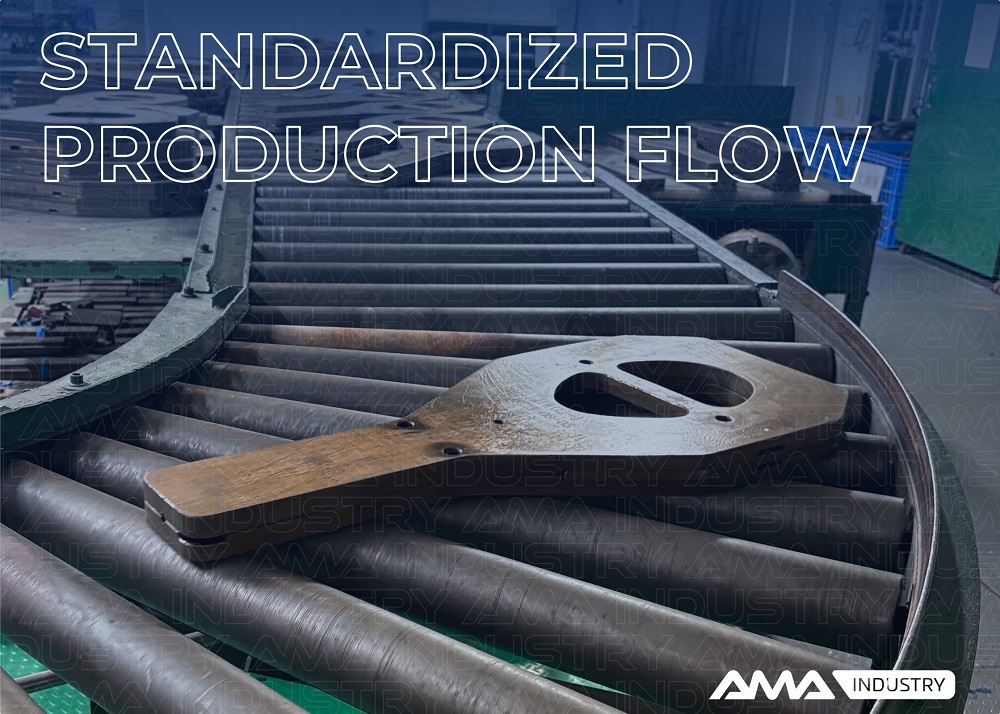
Quality control is embedded throughout the manufacturing process, but frame inspection is one of the most critical stages.
At Nodex Industry, inspection standards include:
Weight control: Each racket must fall within strict tolerance ranges to ensure consistent performance
Balance testing: Proper weight distribution is verified for optimal handling
Structural integrity: Frames are checked for cracks, deformation, or internal defects
Surface quality: Smoothness, paint consistency, and coating adhesion are carefully evaluated
By implementing these standards, Nodex Industry ensures that every racket meets international expectations for durability and performance.
In addition, production data is recorded and traceable, allowing for consistent replication of OEM designs across multiple batches.
Stringing is a critical step that transforms a finished frame into a functional sports product.
During this process:
Strings are installed according to precise tension specifications
String patterns are aligned for optimal ball response
Tension balance is carefully controlled across vertical and horizontal strings
For advanced models, stringing directly affects power output, spin generation, and control sensitivity. In competitive-level products such as a professional tennis racket, this stage plays a decisive role in final performance.

Before shipment, every racket undergoes a final inspection to ensure it meets both functional and visual standards.
Final checks include:
Logo and graphic accuracy
Paint finish and coating durability
Assembly completeness (grommets, grip, handle)
Stringing quality (if applicable)
Packaging is also a critical part of the export process. Nodex Industry provides customized solutions such as:
Individual protective bags or sleeves
Branded cartons and retail packaging
Bulk packaging for wholesale distribution
Labeling and barcode integration
All packaging is designed to protect the product during international transportation while supporting brand presentation in the target market.
As an experienced tennis racket manufacturer, Nodex Industry supports both OEM and ODM projects for global clients.
Key capabilities include:
Custom design support: Frame structure, weight, balance, and stiffness can be tailored
Brand integration: Logos, colors, and graphics are applied with high precision
Flexible production: Suitable for both small batch and large-volume orders
Global export experience: Products meet international quality and logistics standards
Nodex Industry combines advanced production equipment with strict process control, making it a reliable partner for brands seeking consistent quality and scalable manufacturing.
Understanding how tennis rackets are made helps buyers make more informed sourcing decisions. A reliable tennis racket manufacturer is defined not only by materials or pricing, but by the ability to maintain a standardized production flow, strict quality control, and consistent output across every order.
At Nodex Industry, each step in the tennis racket manufacturing process—from carbon fiber layup to final inspection—is carefully managed to ensure performance, durability, and visual consistency. With structured production systems and flexible OEM/ODM capabilities, Nodex Industry supports global brands in delivering dependable products to their markets.
 EN
EN